Verruca care
Siğil
A verruca is a hard, virus-caused lesion on the sole that can hurt when you walk, and is often mistaken for a callus. We first check whether it is a callus or a verruca, give the care that suits it, and refer you to a dermatologist when needed.
- Duration
- About 20–30 minutes
- Booking
- By WhatsApp or phone
When should you come?
- You have a hard patch on your sole with tiny black dots in it
- You noticed a 'callus' that hurts when squeezed from the sides
- Several small lesions are appearing close together
- Home remedies have not worked
When to see a doctor
Definitive treatment such as freezing or medication is done by a dermatologist. See a doctor directly if the lesion grows fast, bleeds or changes colour, or if you have a condition affecting your immune system.
How the treatment works
Assessment
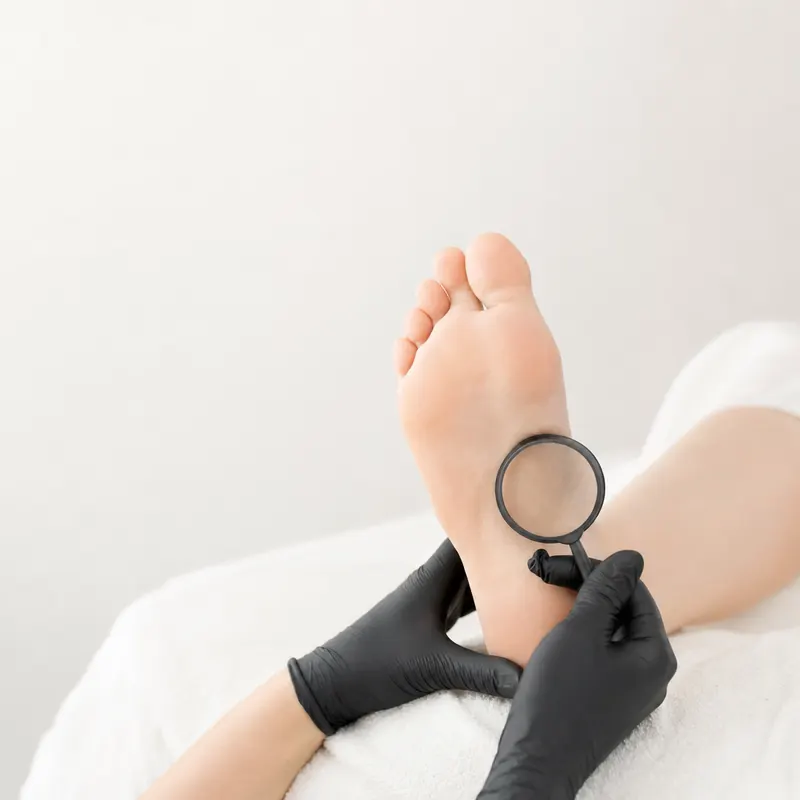
We check whether it is a verruca or a callus; if we are not sure, we refer you to a doctor.
Top layer
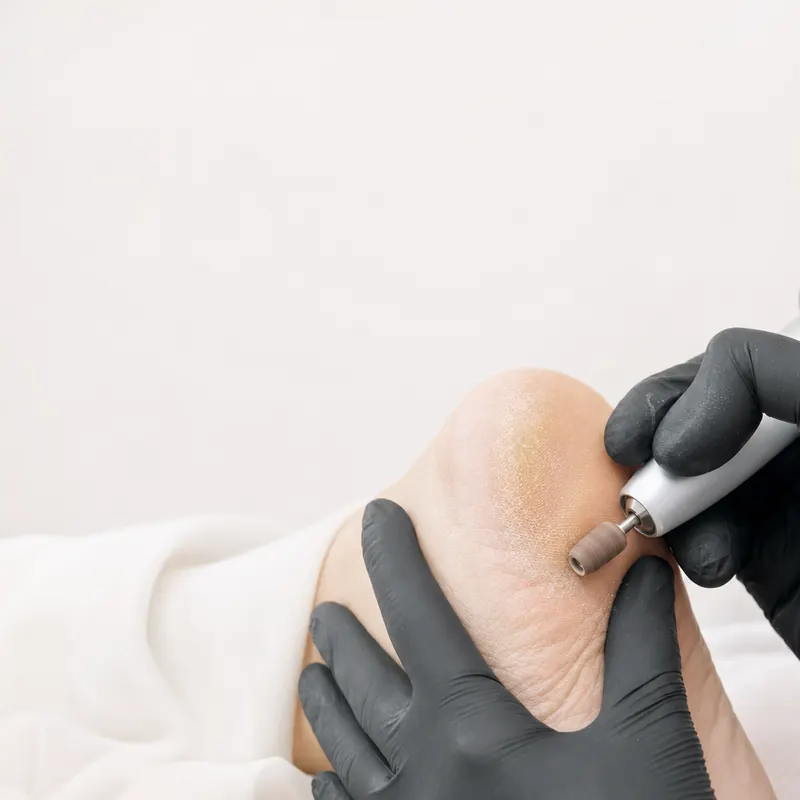
The thickened skin over the verruca is carefully thinned, which eases pressure and pain.
Protection
The area is protected from pressure and we explain how to avoid spreading it.
Follow-up
We set a check-up date to monitor changes.
After your treatment
- Wash your hands after touching it and do not scratch it
- Wear flip-flops at pools and shared showers
- Do not share towels or socks
- See a doctor if it grows, changes colour or bleeds
Questions about this treatment
How do I tell a callus from a verruca?
A verruca usually has tiny black dots and hurts when squeezed from the sides; a callus hurts when pressed on directly. We confirm by looking.
Does a verruca go away on its own?
Sometimes within months, but it can also spread. If it hurts, care and a doctor's view help.
Do you freeze or burn verrucas?
No. A dermatologist does freezing or burning; we assess, care for the top layer and follow up.
Book your appointment on WhatsApp
Tell us what is bothering you and which day suits you. A photo helps us prepare.